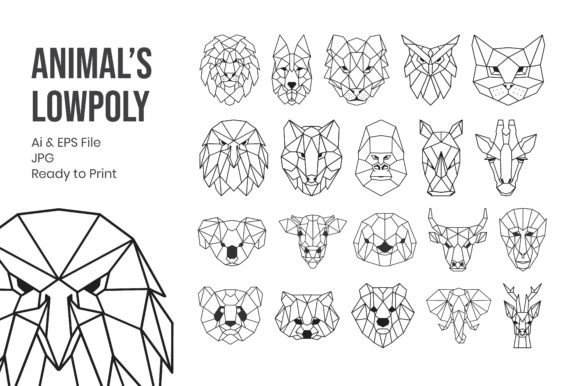
Unlock Unique Branding with Animal's Lowpoly Design Assets
There is a distinct shift happening in modern visual communication. We are moving away from hyper-realistic imagery and flat design toward something more tactile, geometric, and bold. This is where Animal's Lowpoly enters the conversation. It is not merely a collection of images; it is a curated suite of twenty distinct animal heads rendered in a striking low poly style. For designers, marketers, and entrepreneurs, these assets bridge the gap between abstract art and recognizable iconography.
The Geometric Aesthetic: Why Low Poly Works
Low poly art is defined by its use of polygonal shapes—typically triangles—to construct a three-dimensional form on a two-dimensional plane. This style creates a faceted, crystalline appearance that feels both digital and organic simultaneously. The visual characteristics of Animal's Lowpoly rely on sharp angles and strategic color blocking. Each animal head is composed of these geometric planes, creating depth through light and shadow rather than line weight.
The appeal of this style lies in its versatility. It possesses a modern, tech-forward personality while retaining the warmth of nature subjects. Unlike a standard vector illustration, which can sometimes feel sterile, low poly art has texture. It commands attention in crowded visual spaces, such as social media feeds or busy retail shelves. For a brand strategist, this style suggests innovation and precision without being cold or unapproachable.
Practical Applications for Creators and Businesses
Understanding where Animal's Lowpoly fits into your workflow is key to maximizing its value. Because the package includes AI, EPS 10, JPG, and PNG files, the assets are ready for almost any medium.
Screen Printing and Apparel
For those in the fashion industry or running a print-on-demand store, the structure of low poly art is ideal for screen printing. The distinct separation of color planes makes it easier to create film positives. You can use a single animal head as a central chest graphic for a t-shirt or scale it down for a pocket logo on a hoodie. The aesthetic appeals to streetwear brands and outdoor lifestyle labels alike.
Logo Design and Brand Identity
Creating a memorable logo is challenging. Using a recognizable symbol like an animal head helps with brand recall, but standard clipart often looks generic. Animal's Lowpoly offers a solution by providing a stylized, premium font equivalent for imagery. A geometric wolf or bear head works perfectly for esports teams, fitness brands, or tech startups. The "layered" nature of the files allows you to isolate specific facets of the animal to customize the colors to match your specific brand palette.
Digital Media and Web Design
In the realm of web design and social media graphics, static images often fail to engage. However, the dynamic nature of low poly art creates an illusion of movement. These assets work exceptionally well as hero images on landing pages or as distinct avatars for content creators. If you are a blogger or publisher, using these illustrations can unify your visual language across Pinterest, Instagram, and your website, creating a cohesive brand identity that stands out from stock photography.
Strategic Impact on Visual Hierarchy and Perception
Choosing a design asset is rarely just about aesthetics; it is about psychology. The style of Animal's Lowpoly influences how an audience perceives a brand. The sharp, geometric lines suggest stability and structure, while the organic subject matter (the animal) brings in elements of nature and instinct.
This combination creates a unique visual hierarchy. When placed next to body text or other design elements, the high contrast and distinct shapes of the low poly animals naturally draw the eye. This makes them excellent anchors for editorial design layouts. You can use them to break up long blocks of text in a magazine or brochure, guiding the reader's attention to specific sections.
Furthermore, consistency is vital in branding. With twenty different animal heads in the same style, you have the flexibility to create a series of materials. A marketing campaign could feature a different animal for each month or product line, yet the visual language remains instantly recognizable as part of the same family. This builds professionalism and trust with your audience.
Evaluating and Implementing the Assets
When integrating Animal's Lowpoly into your projects, a thoughtful approach ensures the best results.
- Evaluate the Fit: Consider the personality of the animal against the personality of your brand. A fox suggests cleverness, while a bear suggests strength. Ensure the symbolism aligns with your message.
- Font Pairing: Because these illustrations are bold and modern, they pair well with clean sans serif fonts. A sans serif typeface maintains the contemporary feel. However, for a more editorial look, you might contrast the geometric animal with a classic serif font. Avoid overly decorative script fonts, as they can clash with the sharp angles of the low poly art.
- Editing and Customization: Since the files are fully editable and layered, do not be afraid to modify them. You might want to change the background color to fit your packaging design or remove the background entirely for a transparent logo application. The ability to edit the vectors means you can ensure the asset fits seamlessly into your existing layout.
- Commercial Licensing: Always review the licensing terms. For entrepreneurs and small business owners, ensuring that the asset is cleared for commercial use is critical for merchandise and advertising.
Beyond Decoration: Building a Visual Language
Ultimately, Animal's Lowpoly is more than just a set of decorations. It is a toolkit for building a distinct visual language. Whether you are a crafter looking for unique embroidery patterns, a marketer designing a pitch deck, or a publisher needing striking cover art, these assets provide a foundation that is both professional and artistic.
The geometric style ensures that your designs look current and sophisticated. By leveraging the editable nature of the files and understanding the psychological impact of the style, you can create designs that do not just look good—they communicate effectively. In a crowded market, that level of intentional design is what separates the noise from the signal.